The global agricultural economy has definitively entered a phase of measured stabilization, transitioning away from the extreme supply chain volatility and inflationary pressures of the early 2020s toward a highly complex, policy-driven macroeconomic equilibrium. At the absolute core of this structural transition is an urgent demographic and environmental imperative: the global human population is mathematically projected to approach 9.7 billion individuals by the year 2050. Satisfying the nutritional requirements of this expanding population will require a staggering 50% to 100% increase in global food production. Complicating this production mandate are simultaneously shrinking reserves of arable land, escalating climate change threats, intensified weather volatility, and severely depleted freshwater resources. To meet these extraordinary, overlapping demands, the global agricultural sector is undergoing a profound and irreversible digital transformation. One forecast (Knowledge Sourcing Intelligence) projects the global digital agriculture market to grow from about $21.4 billion in 2025 to $35.9 billion by 2030 (CAGR about 10.9%).
Within this expansive macroeconomic landscape, the Southeastern United States—particularly the tri-state economic corridor encompassing Florida, Georgia, and Alabama—has rapidly emerged as a premier, globally recognized ecosystem for Agricultural Technology (AgTech) innovation. Florida, with its unique geographical vulnerability to extreme climate volatility and its vast, highly diversified portfolio of over 300 specialty crops, serves as an unparalleled living laboratory for the deployment of advanced agricultural methodologies. The state’s formal legislative and economic designation of AgTech as a primary targeted economic industry signals a massive influx of public infrastructure spending and private venture capital aimed at permanently shifting the sector from historically labor-intensive traditional farming to highly mechanized, technology-intensive precision agriculture. This comprehensive prospectus delivers an exhaustive, data-driven analysis of the investment dynamics, technological innovations, regional supply chain integrations, and institutional scaffolding driving the Florida AgTech Small and Medium-Sized Enterprise (SME) ecosystem through the 2025 to 2030 forecast period.

Caption: Advanced drone technology enabling precision agriculture and automated crop monitoring, representing the fundamental shift toward technology-intensive farming methodologies across the Southeastern United States.
The Macroeconomic and Strategic Investment Landscape (2025-2026)
The financial infrastructure supporting the AgTech sector has undergone a significant and necessary recalibration over the preceding thirty-six months. PitchBook data show agtech venture capital deal value fell 25.6% in 2024, from $8.1 billion in 2023 to $6.0 billion, while deal count fell 24.3% (PitchBook, Q4 2024 Agtech VC Trends).
However, the architecture of this funding has fundamentally evolved. The funding that remains is defined primarily by a strategic "flight to quality" among institutional investors. Venture capital firms, private equity syndicates, and corporate venture arms have decisively moved away from speculative, growth-at-all-costs models. Instead, they are prioritizing immediate profitability, conducting rigorous, deeply technical due diligence, and focusing exclusively on businesses that offer validated, highly scalable solutions. The current overarching investment thesis across the sector centers on addressing specific, quantifiable operational problems—such as driving direct farmer productivity, measurably reducing food production costs, and actively mitigating the localized impacts of climate change and acute water scarcity.
The Shift from Venture Capital to Private Equity and M&A
The AgTech funding environment has witnessed a notable divergence between early-stage venture capital and late-stage growth equity. Wariness and dissatisfaction with lengthy research and development (R&D) cycles and prolonged paths to profitability have continued to subdue late-stage growth equity investor interest. PitchBook counted 155 agtech VC deals in Q1 2025 and 117 in Q2 2025, the lowest quarterly count in several years, with late-stage rounds taking most of the capital (AgTech Navigator).
Acquisitions remain the main exit route: PitchBook counted 15 agtech exits in Q2 2025, including John Deere’s purchase of Sentera (AgTech Navigator). Strategic buyers are aggressively exploiting current market conditions to pursue both vertical and horizontal acquisitions, specifically targeting AgTech SMEs that possess strong intellectual property (IP) and proprietary technology assets that can be rapidly integrated into larger, established agricultural supply chains.
Overcoming SME Adoption Barriers via Agri-TaaS and RaaS
For Small and Medium-Sized Enterprises operating on the front lines of agricultural production, the primary impediment to adopting advanced technologies has historically been prohibitive initial capital expenditure requirements. A sharp fall in inflation-adjusted net farm income from its 2022 record (USDA ERS), combined with a higher-for-longer interest rate environment, severely eroded the purchasing power of farm operators. A UF/IFAS survey of Florida citrus producers found lack of capital among the barriers to adopting precision farming (UF/IFAS EDIS).
To circumvent this structural economic barrier, the AgTech market is rapidly transitioning toward Agriculture Technology-as-a-Service (Agri-TaaS) and Robots-as-a-Service (RaaS) financial models. These subscription-based financial frameworks convert prohibitive upfront capital expenditures (CAPEX) into highly manageable, scalable operating expenses (OPEX). By utilizing Agri-TaaS, farmers can deploy advanced technologies—including autonomous harvesting machinery, artificial intelligence analytics platforms, and precision hardware—by paying predictable monthly subscription or usage-based fees. This strategic pivot is democratizing access to high-tier agricultural innovations, allowing small and medium-sized farms to adopt cutting-edge systems without risking financial insolvency. The Agri-TaaS market is consequently experiencing explosive growth, directly correlating with the increased adoption of digital farming solutions across the Southeastern United States.
Florida’s Elevation to a Global AgTech Epicenter
The state of Florida is currently engineering a highly deliberate, exceptionally well-funded economic strategy to cultivate its AgTech sector. This approach flawlessly integrates state-level legislative policy with localized, high-impact infrastructure development. Recognizing the critical necessity of technological innovation in safeguarding America's future food supply, the Florida Department of Commerce (FloridaCommerce) has officially designated Agricultural Technology as a state target industry. This classification elevates the sector's visibility and specifically prioritizes AgTech for highly lucrative state and local economic development programs, tax incentives, and long-term capital investments designed to generate significant returns through high-wage job creation.
Florida Secretary of Commerce J. Alex Kelly has publicly articulated that the technology behind AgTech represents a vital frontier in both global economic competitiveness and domestic national security. From data-driven systems that fortify supply chain logistics to advanced resource management platforms, Florida is positioning itself to lead the nation in agricultural innovation.
The UF/IFAS Center for Applied Artificial Intelligence in Agriculture
At the absolute vanguard of this statewide economic movement is the University of Florida Institute of Food and Agricultural Sciences (UF/IFAS). In a landmark, foundational initiative, UF/IFAS recently broke ground on the groundbreaking Center for Applied Artificial Intelligence in Agriculture, located in Balm, Florida. This state-of-the-art, 40,000-square-foot facility, constructed at an estimated cost of $40 million, is explicitly designed to transform the broader Tampa Bay region into an undisputed global hub for agricultural robotics, machine learning, and artificial intelligence.
The primary mandate of the Center for Applied Artificial Intelligence in Agriculture is to fundamentally solve the compounding crises of rising production costs and chronic labor shortages through the aggressive deployment of automation. The facility serves as the central nexus for statewide AI initiatives, leading the design, evaluation, and demonstration of novel AI-based technologies. Its multifaceted research and commercialization efforts focus rigorously on:
- Machine Vision and Plant Breeding: Utilizing advanced AI algorithms for the quantitative analysis of highly complex phenotypic data, thereby dramatically accelerating the development of crop resilience to climate stressors and invasive pathogens.
- Crop Production Automation: The aggressive deployment of smart robotics designed to wholly automate historically labor-intensive harvesting tasks. This includes the development of autonomous farm machinery capable of seamless farm data acquisition, rapid data transfer, and real-time analytical processing.
- Precision Pest Management: Utilizing high-resolution AI imaging for the real-time detection and identification of pests in the field. This allows for hyper-targeted, localized pest management and eradication, which vastly minimizes the deployment of expensive, environmentally damaging chemical pesticides and actively protects long-term soil health.
Dr. Scott Angle, Senior Vice President for Agriculture and Natural Resources at the University of Florida, has emphasized that this facility will physically harness cutting-edge innovation to radically strengthen agricultural systems, ensuring a safe, reliable, and entirely domestic food supply.
The Rural Renaissance and Critical Infrastructure Investments
Florida's AgTech strategy extends significantly beyond elite academic hubs, penetrating deep into the state's rural economic zones. The "Rural Renaissance" initiative, heavily championed by the Florida Chamber Foundation, aims to aggressively double the gross domestic product (GDP) contribution of Florida's 31 rural counties from a current baseline of 2.92% to an ambitious 5.56% by the year 2030. The Florida Chamber Foundation identifies agricultural technology as one of the key strategies, alongside infrastructure, manufacturing, broadband and workforce development (Rural Renaissance brief).
However, the successful integration of advanced precision farming, AI-driven crop analytics, internet-enabled micro-irrigation systems, and autonomous drone monitoring is heavily and undeniably reliant on concurrent, large-scale infrastructure investments. Foremost among these requirements is the massive expansion of high-speed rural broadband networks, which are absolutely essential for transmitting the terabytes of data generated by modern smart-farming equipment. Without ubiquitous digital connectivity, the implementation of IoT sensors and cloud-based AI analytics remains impossible in remote agricultural regions.
A prime, highly successful example of this localized, infrastructure-first investment strategy is the $23.5 million state funding package recently announced by Governor Ron DeSantis, specifically tailored for AgTech development and economic resilience. This comprehensive package included a highly targeted $5.6 million financial allocation to the City of Newberry for the construction and modernization of the F-300 AgFoodTech Innovation Park. This critical infrastructure upgrade—focusing on specialized roadway logistics and high-capacity water utilities—is designed to physically support the heavy resource demands of AgTech SMEs. Harvest Singularity, the park’s first private tenant, broke ground in May 2026 on the first of two hydroponic greenhouses, expected to open in 2027 (WCJB).
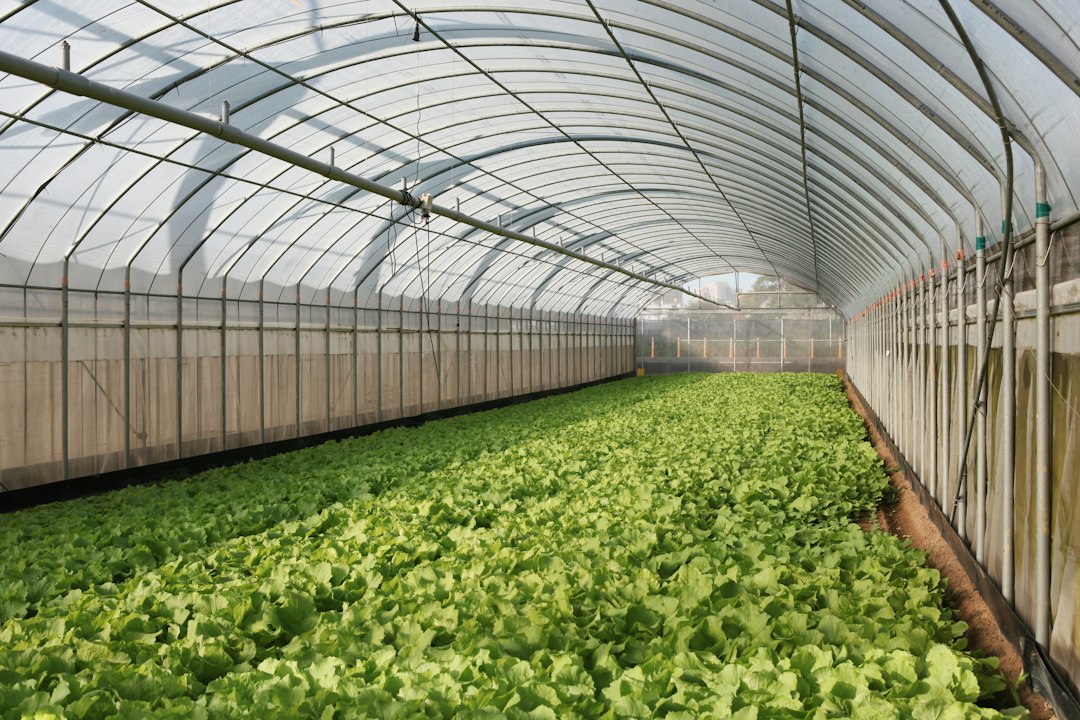
Caption: Controlled environment agriculture (CEA) facilities use mobile analytics and cloud-based AI to monitor real-time crop health metrics (illustrative image: lettuce in a greenhouse).
The Southeastern AgTech Supply Chain: Florida, Georgia, and Alabama
While Florida commands attention through massive state-sponsored AI initiatives, the overarching success and long-term viability of the Florida AgTech ecosystem are inextricably linked to the broader, highly integrated Southeastern United States agricultural corridor. The seamless integration of operations across Florida, Georgia, and Alabama creates a massively robust, cross-border supply chain that provides critical structural resilience against localized climate disaster events and allows for diverse, highly optimized operational scale.
The dynamics of this tri-state ecosystem are highly symbiotic. Alabama contributes unmatched physical scale, boasting over 8.3 million acres of active farmland spread across 39,000 distinct farming operations, maintaining a dominant national presence in row crops, commercial poultry, and high-yield peanut production. Georgia operates as the logistical and technological integration hub, leading the Southeast in diverse commodity output, controlled environment agriculture (CEA), and complex agribusiness distribution networks. Florida completes the triad by providing deep, historically entrenched expertise in highly sensitive specialty crops, offering year-round growing seasons, and acting as the preeminent center for advanced AI and machine vision research.
For SMEs aiming to achieve sustainable scale within this competitive ecosystem, operating in isolation is a guaranteed path to failure. AgTech startups and mid-sized agribusinesses must actively engage with regional partners to optimize raw material resource use, secure uninterrupted access to advanced technological inputs, and navigate complex interstate distribution logistics. Several highly notable companies provide the essential products, integrated services, and collaborative corporate frameworks required for this cross-state ecosystem to function efficiently:
- GreenPoint Ag (Decatur, Alabama): Operating as a massive, farmer-owned agricultural input supplier with over $1 billion in annual wholesale and retail sales, GreenPoint Ag maintains 108 strategic locations across the Southern United States. The organization provides critical crop nutrients, advanced protection products, and a comprehensive array of specialized agronomic technology services through its proprietary AccuField platform. For SMEs, GreenPoint Ag serves as an absolutely vital, highly reliable technology distributor and agronomic advisor, effectively bridging the gap between hardware manufacturers and local farm operators.
- Southern Ag Service (Foley, Alabama): A deeply established, fourth-generation family operation providing sophisticated precision agriculture equipment, advanced irrigation management systems, and highly customized crop production services across the Alabama, Florida, and Georgia territories. Southern Ag Service facilitates the critical, hands-on physical implementation and maintenance of complex smart farming hardware in the field.
- Vantage South (Enterprise, Alabama): Trimble’s Vantage precision-agriculture dealer for Alabama, Florida and neighboring states, set up from the Trimble reseller Ag Management Solutions, offering GPS guidance and related precision-farming equipment and support.
- Costa Farms (Miami, Florida): Representing the sheer, massive scale of Florida's horticultural and controlled environment agriculture sectors, Costa Farms perfectly highlights the commercial necessity and viability of indoor, heavily automated nursery technology systems. Their operations serve as a benchmark for scaling ornamental and specialty crop production utilizing advanced logistics.
- Agrinamics (Atlanta, Georgia): An Atlanta company that develops integrated monitoring, management and control systems for indoor vertical farms.
| Company / Enterprise | Headquarters | Primary Operating Region | Core Technological or Service Competency |
|---|---|---|---|
| GreenPoint Ag | Decatur, AL | 10 Southern states incl. AL, FL, GA (108 locations) | AccuField Tech Services, Crop Nutrients, Wholesale Agronomy |
| Vantage South | Enterprise, AL | AL, FL and neighboring states | Trimble Precision-Ag Guidance and Support |
| Southern Ag Service | Foley, AL | AL, FL, GA | Custom Irrigation, Precision Hardware Implementation |
| Agrinamics | Atlanta, GA | Georgia / National | Vertical-Farm Monitoring and Control Systems |
Startup Commercialization and University Spin-offs
The successful, rapid translation of highly theoretical academic research into commercially viable SME business operations is the most critical economic pipeline for the Southeastern ecosystem. If scientific breakthroughs remain trapped in university laboratories, the economic benefits of AgTech are entirely negated. Organizations like UF Innovate are absolutely instrumental in facilitating this transition, expertly handling the bureaucratic complexities of technology licensing, conducting initial market research, securing startup funding opportunities, and providing critical business education to scientific researchers attempting to commercialize a potential product. In fiscal year 2025, UF reported 446 technology disclosures, 131 licenses, 455 patent applications and 125 U.S. patents granted (UF News).
Several highly notable, market-disrupting commercializations have emerged from this specific pipeline:
- Agroview: A highly sophisticated AI, machine learning, and computer vision platform initially developed by UF researchers following the devastation of Hurricane Irma. Designed to completely replace notoriously slow and inaccurate manual crop surveying, Agroview utilizes drone-based counting to reveal granular data regarding crop yields, localized nutrient deficiencies, and acute plant stress. This technology has become absolutely vital for the rapid assessment of crop insurance claims and accurate yield predictions across the state.
- Agriculture Intelligence (AgIntel): The corporate, commercial entity successfully spun out to market the Agroview platform. Led by CEO Matt Donovan, AgIntel won the inaugural Florida Chamber Foundation Technology & Innovation Summit pitch competition in August 2025; the Chamber’s announcement says its technology is backed by enterprise contracts and gross margins above 90 percent.
- EZ Ag Innovations (EZ-AI): A highly specialized startup formed by UF/IFAS scientists Nathan Boyd and Arnold Schumann. Utilizing technology patented and explicitly licensed by the University of Florida, EZ-AI has developed AI-based targeted weed-spraying technology, designed to spray only weeds and minimize damage to crops such as strawberries and tomatoes (UF News).
The Vanguard of Technological Innovation: Trends Driving the 2025-2030 Market
The 2025-2030 AgTech market is fundamentally defined by the rapid, simultaneous convergence of Artificial Intelligence (AI), the Internet of Things (IoT), and commercial remote sensing technologies. The AI in agriculture market alone is statistically forecast to reach an astonishing $8.5 billion by 2030, growing at a CAGR of 25.1% (BCC Research). Crucially, these technologies are no longer theoretical concepts debated in academic journals; they are actionable, commercially available tools currently being deployed at scale across the Southeastern United States to aggressively manage microclimates, optimize resource efficiency, and ensure strict regulatory compliance.
Precision Agriculture and Comprehensive Digitalization
The era of intuitive, guesswork-based farming has ended. Progressive digital agronomy tools—which seamlessly merge artificial intelligence with expansive IoT networks and massive big data analytics systems—are increasingly used by commercial farmers. The routine integration of commercial satellite monitoring and high-resolution aerial data fundamentally enables real-time field mapping, highly accurate yield prediction, and complex vegetation index analysis.
The recent proliferation and commercialization of satellite technology have drastically reduced the historic costs associated with macro-climate data acquisition. Simultaneously, the deployment of highly localized, in-ground soil sensors and interconnected IoT devices provides farmers with hyper-specific microclimate data. Managing these microclimates—localized atmospheric zones heavily influenced by subtle shifts in topography, altitude, and adjacent vegetation—is now universally recognized as a critical, non-negotiable strategy for mitigating the highly adverse effects of localized weather volatility and ensuring consistent, profitable farm yields. Data analytics platforms process this vast influx of information to produce unique, real-time insights, allowing farmers to execute highly optimized, second-derivative agricultural practices regarding irrigation timing and precise nutrient application.
Automation, Robotics, and Controlled Environment Agriculture
To combat the severe, chronic agricultural labor shortages and rapidly escalating minimum wage costs, SMEs are increasingly and aggressively turning to fully autonomous machinery. The deployment of self-driving, GPS-enabled tractors, highly precise robotic harvesters, and fully automated planting systems successfully eliminates traditional human labor constraints while drastically boosting operational speed and mechanical precision. For example, Wish Farms owner Gary Wishnatzki co-founded Plant City-based Harvest CROO Robotics, whose automated strawberry harvester reported picking rates on par with human crews in 2025 field trials (The Packer).
Furthermore, the implementation of Controlled Environment Agriculture (CEA)—which encompasses hyper-advanced vertical farming and climate-controlled, high-tech greenhouse operations—is experiencing explosive, exponential growth. CEA methodologies allow for continuous, year-round, highly intensive crop production that is entirely insulated from external weather shocks, floods, and invasive pest swarms. In hurricane-prone regions like Florida, this is an essential, highly lucrative adaptation. Innovations such as the Citrus Under Protective Screen (CUPS) systems utilized heavily in Polk County demonstrate how physical screen houses, integrated with advanced internal climate controls, lead to vastly superior fruit quality, zero invasive insect damage, and radically reduced pesticide usage.
Sustainability, Traceability, and Ecosystem Services
Within the 2025-2030 forecast window, environmental sustainability is no longer viewed merely as an ethical or public relations consideration; it has become a primary, quantifiable economic driver. Surging global consumer demand for transparently sourced, non-GMO, organically produced, and highly sustainable foods is actively forcing agricultural supply chains to completely re-architect their operations. AgTech platforms, particularly those integrating secure blockchain architecture, provide the immutable digital traceability required to independently verify sustainable practices and guarantee regulatory compliance at every single level of food production.
Furthermore, massive institutional investments in carbon farming and regenerative agriculture models currently enable smart farmers to actively tap into highly lucrative ecosystem service markets. By utilizing AgTech to precisely measure and verify their environmental impact, SMEs can generate entirely new, non-crop revenue streams via the sale of verified carbon credits, which are generated through measurable soil sequestration, forestry restoration, and highly efficient water-use mitigation strategies.
The Strategic Role of Southeastern Think Tanks and Non-Profits
The blindingly rapid pace of technological advancement within the AgTech sector presents a massive, often overlooked adoption risk. If highly complex AI solutions and intricate robotic hardware are deployed without proper educational framing and economic support, SME adoption will fail. To actively bridge the massive intellectual and financial gap between theoretical AI engineering and practical, on-the-ground farming operations, a highly robust network of specialized think tanks and non-profit organizations operates continuously across the Southeastern United States.
These entities serve as the absolute intellectual scaffolding of the AgTech ecosystem. They successfully de-risk the integration of advanced technology for highly vulnerable SMEs by providing comprehensive peer-to-peer training, facilitating massive federal grant funding, offering unbiased technological consulting, and driving critical legislative policy advocacy.
Key Institutional Pillars Supporting SMEs
- USF Future of Food Think Tank (Tampa, Florida): Operating as a massive, highly coordinated coalition of over 265 interdisciplinary members and 94 distinct partner organizations, this think tank focuses intensely on reshaping the localized food future of the Tampa Bay region. Through its Community Resiliency Hub, it actively connects agricultural SMEs with advanced university research. The organization focuses heavily on deploying localized roadmaps for regenerative agriculture, driving advanced workforce development, and ensuring comprehensive food system resilience. Their "Sowing Strategic Stories" initiative directly pairs graduate business students with local urban farms to build highly effective, research-based marketing narratives that explicitly highlight the economic value of emerging food production models.
- agInnovation South (Southeastern Region): A powerful, highly organized regional network seamlessly uniting the specific directors of 15 State Agricultural Experiment Stations located within Land-grant universities across the southern United States. This organization pools vast regional academic expertise, shares massive computational resources, and successfully secures vital federal appropriations—specifically through the Hatch Act's Multistate Research Fund—to directly translate specialized research discoveries into real-world, commercial impacts for local farmers and rural communities.
- Farm Foundation (National with Regional Impact): Operating simultaneously as a highly trusted analytical "think tank" and a highly actionable "do tank," this 501(c)(3) non-profit organization deliberately accelerates practical, deployable solutions across the entire food and agricultural value chain. The Farm Foundation provides exceptionally reliable, unbiased economic analysis on the direct financial impacts of precision agriculture, artificial intelligence integration, and complex gene editing. They actively champion fair market access, ensure complete supply chain transparency, and advocate heavily for sound legislative policies that expand economic opportunity for all tiers of producers.
- American Farmland Trust (AFT) (Regional Presence): An organization fiercely dedicated to the physical and legal protection of critical agricultural land. AFT extensively maps farmland loss across the Southeast and actively champions federal and state programs that financially incentivize sound soil health practices. They facilitate the highly complex operational transition to carbon-neutral supply chains, aggressively assist SMEs in securing protective conservation easements, and maintain strategic partnerships aimed at increasing opportunities in advanced regenerative agriculture for minority professionals and historically underserved rural communities.
- Southern SARE (Southeastern Region): Functioning as a highly targeted, federally funded program, Southern SARE provides critical, direct financial grants to working farmers, academic researchers, and localized educators who are actively working to improve the overarching sustainability of U.S. agriculture. This mechanism distributes millions in highly accessible grant funding for strict, farmer-focused field research. This financial backing explicitly enables vulnerable SMEs to scientifically test new crop viability, experiment with highly novel biological pest controls, and formulate accurate, verified sustainable enterprise budgets without risking catastrophic personal financial ruin.
- National Center for Appropriate Technology (NCAT) (Regional Field Offices): Maintaining highly active field offices across the South, NCAT delivers hyper-local, deeply sustainable technological solutions explicitly designed to reduce rural poverty and rigorously protect local natural resources. NCAT specialists deliver highly individualized, hands-on technical assistance directly to rural agribusinesses on complex subjects ranging from the highly technical transition to certified organic agriculture, the implementation of advanced biosolarization techniques, complex pest management modeling, and highly effective direct-to-consumer digital marketing strategies.
These organizations are absolutely critical to the ecosystem because they actively ensure that the rapid, highly expensive deployment of modern agricultural technology does not completely bypass or bankrupt smaller operators. By facilitating access to massive federal grants, such as the USDA's multi-million dollar Climate-Smart funding initiatives, these non-profits explicitly empower rural SMEs to safely adopt capital-intensive technologies that would otherwise be the exclusive, monopolized domain of massive, multinational corporate agribusinesses.
Future Outlook and Strategic Recommendations for Market Participants
The Florida AgTech SME ecosystem, heavily bolstered by its seamless integration with the broader Southeastern agricultural corridor, is definitively positioned for massive, exponential commercial growth between the critical years of 2025 and 2030. The unprecedented convergence of highly targeted, multi-million dollar state funding, the rapid construction of world-class, AI-focused university research facilities, and a newly revitalized, highly disciplined venture capital landscape provides an extraordinarily fertile economic ground for technological deployment.
However, the transition from traditional agriculture to a fully digital, highly automated ecosystem is fraught with complex execution risks. To successfully maximize financial returns, ensure sustainable technological integration, and avoid the severe pitfalls of capital misallocation, several strategic imperatives must be rigorously addressed by both SMEs and institutional investors.
- Aggressively Leverage RaaS and Agri-TaaS Financial Models: Agribusiness SMEs must systematically and aggressively pivot away from traditional, highly debilitating capital expenditure (CAPEX) purchasing models. By wholeheartedly embracing Technology-as-a-Service, small and mid-sized agribusinesses can immediately deploy state-of-the-art drone surveying equipment, highly sensitive IoT microclimate soil sensors, and immensely powerful AI-driven predictive analytics platforms while maintaining crucial capital liquidity and absolute operational flexibility. This avoids the catastrophic risk of purchasing expensive hardware that becomes technologically obsolete within a thirty-six-month cycle.
- Deeply Integrate into the Tri-State Regional Supply Chain: Technology developers and agricultural businesses operating within Florida must actively, deliberately cultivate robust corporate partnerships across the Georgia and Alabama state borders. Utilizing massive regional distributors like GreenPoint Ag and contracting with specialized, highly technical service providers like Southern Ag Service fundamentally ensures that complex hardware maintenance, chemical supply chain logistics, and high-level agronomic consulting are deeply localized and rapidly deployable, thereby preventing catastrophic operational downtime during critical harvest windows.
- Exploit Non-Dilutive Funding and Think Tank Educational Resources: The structural transition to autonomous smart farming carries inherent, potentially ruinous financial risks if executed poorly. SMEs must systematically, constantly engage with supportive entities like Southern SARE, NCAT, and the USF Future of Food Think Tank. These organizations are expressly designed to provide the non-dilutive grant funding, the peer-validated, mathematically sound enterprise budgets, and the completely unbiased technological consulting necessary to safely, profitably pilot highly automated harvesting or precision chemical spraying technologies.
- Capitalize on Export Expansion Programs Targeting Latin America: With the measured stabilization of global agricultural commodity markets, Florida-based AgTech SMEs possess a distinct, highly lucrative geographical advantage. Companies should aggressively utilize export-assistance programs (note that the Florida SBDC ended its administration of STEP on 1 October 2026) to legally and profitably export proprietary AgTech software, specialized CEA hardware, and highly sought-after sustainable agricultural consulting services directly into rapidly expanding, resource-hungry Latin American and Caribbean markets, such as Ecuador, Peru, and Panama. This diversification shields revenue streams from purely domestic market fluctuations.
The global agricultural sector has definitively, permanently shed its historical reputation as a technological laggard. Driven by absolute, existential demographic necessity and currently fueled by an era of unprecedented, well-funded scientific innovation, the Florida AgTech ecosystem is actively establishing a radically new economic paradigm. For institutional investors, venture-backed technologists, and forward-thinking agricultural SMEs, the highly volatile period leading up to 2030 represents a rare, generational opportunity. Those who successfully navigate this landscape will not only secure highly robust, long-term profitability but will fundamentally redefine the physical and digital architecture of the global food supply chain.