Informe de Inteligencia de Mercado de Exportación de Argentina: Análisis Estratégico de Entrada y Crecimiento 2026
Last reviewed:
Updates since publication
- 2025 trade data. USTR estimates U.S. goods exports to Argentina at $10.0 billion in 2025, up 9.6 percent from 2024, and U.S. services exports at $8.9 billion (USTR, Argentina). The commodity table in this article uses 2024 values.
- Alabama STEP. The Alabama Commerce STEP page lists a federal award period of 9/30/2024 to 9/29/2026, which has now ended, and a newer award period of 6/30/2026 to 9/29/2027. Confirm current availability, eligible expenses and pre-approval requirements with Alabama Commerce before planning.
- Florida STEP. The Florida SBDC announced on its STEP page that, effective October 1, 2026, it would conclude its administration of the SBA State Trade Expansion Program (STEP) grant. References to Florida STEP grants in this article may no longer apply. Confirm current export-funding options with the Florida SBDC international trade team before planning.
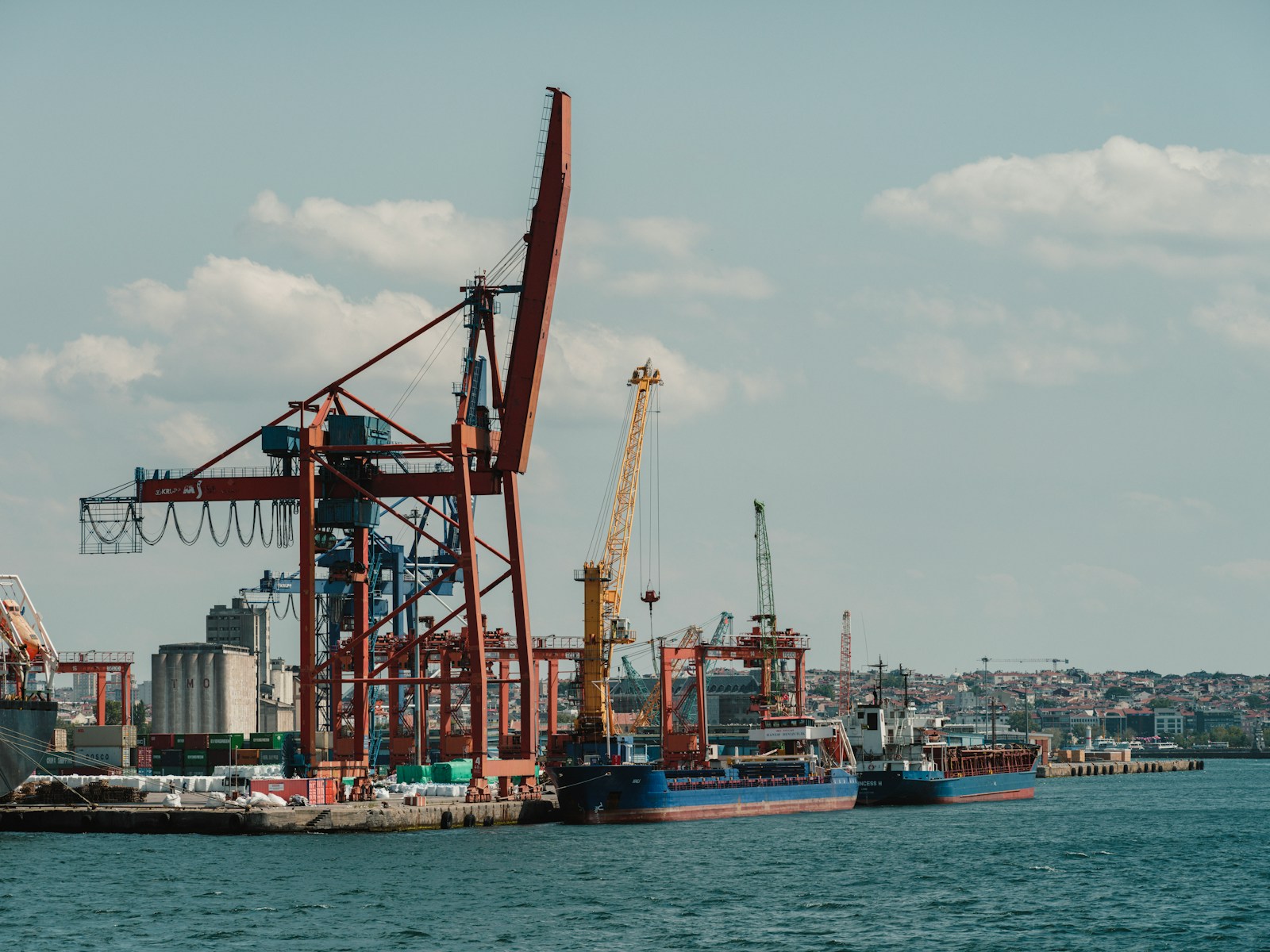
Container terminals like this one are the departure points for ocean freight and industrial exports bound for the Port of Buenos Aires, driving the expansion of United States-Argentina bilateral commerce. Photo: engin akyurt on Unsplash.
For trade-flow data to support your planning, see our Argentina-to-U.S. Import Data Package (in Spanish).
The Macroeconomic and Regulatory Reset of 2025-2026
The commercial landscape defining the bilateral trade relationship between the United States and the Argentine Republic has undergone a historic paradigm shift throughout the 2025 and 2026 fiscal periods. Following decades characterized by systemic protectionism, severe capital controls, and opaque import substitution models, the rapid implementation of aggressive deregulation policies has fundamentally recalibrated the risk-reward calculus for foreign exporters. The dismantling of the widely scrutinized Sistema de Importaciones de la República Argentina (SIRA) and its immediate successor, the SEDI framework, has systematically removed the bureaucratic bottlenecks that previously hindered cross-border trade. Consequently, the commercial environment in Argentina is currently experiencing its most pronounced period of market openness since the early 1990s, signaling a rare and highly lucrative inflection point for United States manufacturers and service providers looking to penetrate South America's third-largest economy.
In 2024, prior to the full realization of these sweeping regulatory overhauls, the United States successfully exported $9.17 billion worth of goods to Argentina, maintaining a robust trade relationship despite legacy administrative hurdles. The composition of these exports underscores the deeply complementary nature of the two economies. Mineral fuels, oils, and distillation products represented the largest export category at $1.83 billion, driven by the operational demands of Argentina's expanding domestic energy sector, particularly the Vaca Muerta shale formation. This was closely followed by heavy machinery, nuclear reactors, and boilers at $1.81 billion, electrical and electronic equipment at $867.43 million, and pharmaceutical products at $695.70 million. As the domestic industrial base in Argentina seeks to modernize and scale its own export capacity—with projections indicating a potential doubling of agricultural, mining, and energy export outputs over the next three to five years—the reliance on high-quality, reliable capital goods and advanced technologies from the United States will only intensify.
This macroeconomic reset is most tangibly represented by the total elimination of the restrictive currency controls colloquially known as the "cepo". Historically, these capital controls structurally prevented Argentine importers from freely accessing the Mercado Único y Libre de Cambios (MULC), the official foreign exchange market, resulting in trapped commercial capital and massive payment delays that deterred small and medium-sized enterprises (SMEs) from engaging in the market. Under the current stabilized financial architecture, the normalization of the foreign exchange market permits Argentine buyers to execute immediate payments upon the arrival of goods at domestic ports. For United States exporters, this necessitates a strategic transition in financial risk management. Open account terms remain highly discouraged until multi-year, trust-based relationships are thoroughly established; however, the negotiation of traditional trade finance instruments, specifically Letters of Credit (L/C) or Documents against Payment (D/P), is now fully viable and heavily recommended as the standard operating procedure for market entry. This shifts the burden of sovereign and currency risk away from the individual exporter and onto institutional financial entities, profoundly de-risking the export lifecycle.
The Agreement on Reciprocal Trade and Investment (ARTI)
The cornerstone of this renewed bilateral synergy is the United States–Argentina Agreement on Reciprocal Trade and Investment (ARTI), formally signed and executed in 2026. The ARTI serves as a comprehensive, rules-based framework designed to drive long-term macroeconomic growth, expand reciprocal market opportunity, and create an exceptionally transparent environment for commerce, intellectual property, and innovation. By lowering long-standing trade barriers, the agreement structurally guarantees that the frictionless environment generated by recent domestic deregulation is codified into international commercial law.
A highly transformative element of the ARTI for United States exporters is the reciprocal reduction and elimination of tariffs across key strategic product categories. Argentina has committed to providing preferential market access for a vast array of United States goods, explicitly prioritizing critical sectors such as pharmaceutical medicines, advanced chemical compounds, industrial machinery, information technology products, and complex medical devices. Under the ARTI, which was signed on February 5, 2026 but has not yet entered into force, Argentina has committed to eliminate or reduce duties on a range of U.S. goods. Whether a given product is covered, and from when, depends on the agreement’s tariff schedules, so exporters should check their HTS classification against the agreement text before relying on duty-free treatment. In return, the United States has agreed to remove reciprocal tariffs on specific, unpatented natural resources utilized in pharmaceutical applications, further integrating the biomedical supply chains of both nations.
Beyond tariff optimization, the ARTI institutes sweeping mandates regarding structural business environments. Article 2.8 of the agreement enforces Good Regulatory Practices, binding Argentina to adopt protocols that guarantee greater transparency, predictability, and public participation throughout the lifecycle of commercial regulations, thereby preventing the sudden, unannounced implementation of trade barriers that characterized previous administrations. Concurrently, Article 2.6 introduces a highly robust standard of protection for intellectual property. Argentina is now legally obligated to provide effective civil, criminal, and border enforcement mechanisms to combat the misappropriation of intellectual property, specifically prioritizing strict legal action against trademark and copyright infringements in both physical and digital environments. This provision is absolutely vital for technology, software, and advanced manufacturing firms located in the United States, as it drastically mitigates the risks associated with technology transfer, brand dilution, and software piracy that frequently plague emerging markets. Additionally, Article 2.9 addresses ethical supply chain operations by mandating that Argentina strictly prohibit the importation of any goods mined, produced, or manufactured utilizing forced or compulsory labor, ensuring that bilateral trade adheres to modern global labor standards.
Streamlined Customs and Logistical Overhauls
The eradication of the SIRA system has triggered a cascade of logistical simplifications that drastically reduce the administrative overhead required to clear goods through Argentine customs facilities. Previously, the importation process was subjected to opaque, discretionary approval matrices that could delay shipments indefinitely. Currently, the documentation requirements have been streamlined to align with standard international shipping protocols.
United States exporters must ensure that their commercial invoices are meticulously prepared in Spanish to avoid unnecessary delays during the translation processes at ports of entry. Confirm with your customs broker the documents currently required for each shipment, including any proof of origin needed to claim ARTI preferences once the agreement is in force.
To effectively navigate this newly optimized environment, choosing the correct logistical pathways and partners is paramount. Ocean freight represents the most cost-effective solution for high-volume, heavy-tonnage exports such as industrial machinery, raw agricultural inputs, and base metals. Ships departing from major Southeastern gateways, specifically PortMiami, Port Everglades, and the Port of Savannah can reach the Port of Buenos Aires. Transit times vary by carrier, routing and port rotation; ask your forwarder for current schedules. Conversely, for time-critical, high-value shipments such as advanced medical devices, pharmaceuticals, and sensitive information technology hardware, air freight departing from Miami International Airport (MIA) to Ezeiza International Airport (EZE) is the fastest option; confirm schedules and cargo requirements with the airline or forwarder.
The complexities of navigating international shipping routes necessitate the engagement of highly specialized freight forwarders and customs brokers possessing distinct expertise in the Southern Cone trade lanes. Organizations operating out of the Southeastern United States are particularly well-equipped for this task. Look for freight forwarders and licensed customs brokers with documented Southern Cone experience, and confirm export documentation, any certificates required for regulated products such as medical devices, and electronic export information filings before departure.
Table 1: Top 25 United States Export Commodities to Argentina (2024 Valuation)
The following data illustrates the primary commodity categories exported from the United States to Argentina, reflecting the deep industrial and chemical demands of the Argentine market.
| Harmonized Tariff Schedule (HTS) Category | 2024 Export Value (USD) |
|---|---|
| Mineral fuels, oils, distillation products | $1.83 Billion |
| Machinery, nuclear reactors, boilers | $1.81 Billion |
| Electrical, electronic equipment | $867.43 Million |
| Pharmaceutical products | $695.70 Million |
| Aircraft, spacecraft | $561.11 Million |
| Organic chemicals | $554.20 Million |
| Optical, photo, technical, medical apparatus | $429.67 Million |
| Plastics | $407.70 Million |
| Miscellaneous chemical products | $354.01 Million |
| Commodities not specified according to kind | $298.20 Million |
| Vehicles other than railway, tramway | $274.84 Million |
| Essential oils, perfumes, cosmetics, toiletries | $125.22 Million |
| Articles of iron or steel | $118.87 Million |
| Fertilizers | $84.21 Million |
| Inorganic chemicals, precious metal compounds | $76.75 Million |
| Rubbers | $68.02 Million |
| Soaps, lubricants, waxes, modeling pastes | $60.21 Million |
| Tanning, dyeing extracts, tannins, derivatives | $49.65 Million |
| Works of art, collectors' pieces, antiques | $47.35 Million |
| Tools, implements, cutlery of base metal | $37.61 Million |
| Oil seed, oleagic fruits, grain, seed, fruits | $34.13 Million |
| Albuminoids, modified starches, glues, enzymes | $24.80 Million |
| Toys, games, sports requisites | $24.15 Million |
| Miscellaneous articles of base metal | $22.20 Million |
Sectoral Deep Dives and Southeastern United States Synergies
The intersection of Argentina's acute demand for industrial modernization, healthcare infrastructure enhancement, and digital transformation perfectly aligns with the concentrated manufacturing and service hubs located within the Southeastern United States. An analysis of the primary growth sectors reveals substantial opportunities for small and medium-sized enterprises headquartered in Alabama, Florida, and Georgia.
Energy Infrastructure and Industrial Machinery: The Alabama Advantage
As Argentina positions itself to drastically scale its export capacity in the global energy and mining markets—driven largely by the vast reserves found within the Vaca Muerta shale fields and the expansive lithium deposits in the Andean region—the demand for durable, high-performance industrial machinery has surged. The Argentine administration anticipates that within the next five years, the dollar value generated by the energy and mining sectors will rival the total economic output of the entire Pampas agricultural region, signaling an unprecedented period of industrial capitalization. This rapid expansion requires a constant influx of heavy equipment, fluid handling systems, emergency power generators, and calibrated industrial tools.
The State of Alabama stands as a premier supplier for these exact industrial needs. Driven by a highly diversified manufacturing base, Alabama companies exported a staggering $26.8 billion in goods and services globally in 2024, representing the second-highest total on record and a nearly thirty percent increase over pre-pandemic levels. Transportation equipment, primary metal manufacturing, and non-electrical machinery constitute the absolute core of Alabama's export portfolio.
Alabama manufacturers and equipment suppliers serving energy, mining and industrial customers can start with the Alabama Department of Commerce’s Office of Global Business, which can advise on current export services and trade missions.
Healthcare and Medical Devices: Regulatory Acceleration in Florida and Georgia
The Argentine healthcare sector, characterized by medical expenditures that traditionally account for nine to ten percent of the national gross domestic product, relies profoundly on international supply chains. Imports satisfy approximately eighty percent of the total market demand for medical equipment and advanced devices. The United States remains the dominant supplier of premium medical technologies, commanding an eighteen percent import market share in 2023. A landmark regulatory shift occurred in 2025 that has dramatically accelerated the velocity of this specific trade lane. The Argentine Bureau of Medicines, Foods and Medical Technology (ANMAT), the national regulatory authority equivalent to the United States Food and Drug Administration, issued Disposición 4446/25. This regulation dismantled the requirement for authorized importers to seek individual pre-authorization for every single import transaction involving low-risk Class I and Class II medical products. The disposición does not list products; whether a device is Class I or II follows ANMAT’s risk classification rules (Disposición 64/25), so confirm your device’s class before shipping. Registered importers can now bring in such products, provided the devices are already registered with ANMAT, by filing an import notice (aviso de importación, a sworn statement) through ANMAT’s TAD platform within 48 hours of customs clearance, instead of seeking authorization for each shipment (Disposición 4446/25, published June 24, 2025).
This simplification may benefit medical device manufacturers and distributors in Florida and Georgia, particularly for low-risk Class I and II products already registered with ANMAT.
Financial Technology and Digital Services: The Atlanta Ecosystem
While traditional manufacturing and physical commodities dominate shipping volumes, the exportation of digital services and financial technology (Fintech) represents an exponential growth vector within the United States-Argentina trade corridor. Despite operating in an environment historically plagued by systemic inflation and macroeconomic volatility, Argentina has cultivated a highly resilient and fiercely innovative technology sector. The nation boasts a robust class of software engineers and has functioned as a premier incubator for Latin American tech startups since the early 2000s. However, the backend processing power, cybersecurity frameworks, and expansive digital payment architectures required to scale these local innovations globally are predominantly concentrated in the Southeastern United States, specifically within the State of Georgia.
Atlanta has firmly established itself as a global epicenter for financial technology, earning the moniker "Transaction Alley". Argentine digital interfaces can draw on the robust payment plumbing developed by Georgian enterprises. The integration of these ecosystems is actively championed by diplomatic initiatives, such as software trade missions hosted by the Argentine Consulate in Atlanta, designed to position Argentina as a preferred near-shoring destination while exposing Argentine firms to Atlanta's superior financial infrastructure.
Georgia’s financial technology companies may find opportunities in Argentina’s digital payments market; exporters of financial software and services should check licensing and foreign-exchange rules with local counsel.

The Port of Miami Tunnel ensures rapid ingress and egress for commercial freight vehicles, a critical component in minimizing dwell times for exports destined for the Port of Buenos Aires.
Strategic Capital Allocation: State-Level Export Funding and Grants
International expansion invariably requires upfront capital expenditure to fund market research, legal compliance, physical travel, and localized marketing. Recognizing the immense economic value of stimulating international trade, state governments across the Southeastern United States have developed robust, highly accessible grant programs designed specifically to absorb the initial financial risks associated with penetrating foreign markets like Argentina. Utilizing these non-dilutive funding mechanisms is a critical component of a disciplined export strategy.
Florida: SelectFlorida Gold Key and Matchmaker Grants
For businesses incorporated within the State of Florida, the SelectFlorida organization provides the highly valuable Gold Key/Matchmaker Grant. This program is strategically designed to integrate with the United States Commercial Service's "Gold Key" program, an elite matchmaking service wherein federal trade specialists arrange highly curated, one-on-one meetings with pre-vetted, financially qualified Argentine buyers, distributors, and government procurement officials. Check SelectFlorida for the current grant terms, eligible expenses and reimbursement amounts.
The structural parameters of the grant are exceptionally favorable. Reimbursement amounts are set by SelectFlorida for each activity and have changed over time, so confirm the current figures with your SelectFlorida trade manager before budgeting. SelectFlorida's current trade grants page does not list separate interpreter or translation allowances, so budget for professional interpreters and Spanish translation of technical materials as your own cost unless your trade manager confirms otherwise. To qualify for this funding, the applicant must be registered with the Florida Division of Corporations, generate a minimum of $250,000 in annual sales during the previous calendar year, and operate either as a Florida-based manufacturer producing goods within the state, or as an approved services provider operating from a Florida location. It is absolutely imperative that organizations submit their grant applications and receive formal approval from SelectFlorida prior to paying any participation fees or engaging the Commercial Service; retroactive reimbursements are strictly prohibited.
Alabama: The STEP Grant and Innovate Alabama
The Alabama Department of Commerce spearheads aggressive international trade initiatives through its Office of Global Business, directly administering the State Trade Expansion Program (STEP). Funded in part by the United States Small Business Administration (SBA), the STEP grant operates as a reimbursement mechanism to assist Alabama-based businesses in executing approved export marketing activities. This includes offsetting the substantial costs associated with participating in foreign trade missions, such as the delegations frequently led by the Alabama Department of Commerce to South American aerospace and industrial expositions. To secure STEP funding, an enterprise must be a for-profit entity headquartered in Alabama and operational in Alabama for at least twelve months, qualify as a small business under strict SBA size standards, and crucially, demonstrate that the goods or services intended for export are of U.S. origin or contain at least fifty-one percent U.S. content. Since its inception, the national STEP framework has demonstrated a massive return on investment, generating approximately twenty-seven dollars in export sales for every single dollar distributed in funding.
For Alabama enterprises operating specifically within the technology, aerospace, and advanced biotechnology sectors, the Innovate Alabama Supplemental Grant Program provides a massive injection of non-dilutive capital. This program is uniquely structured to support companies that have already successfully navigated the grueling federal grant process to secure Phase I or Phase II Small Business Innovation Research (SBIR) or Small Business Technology Transfer (STTR) awards. Per its program page, eligible recipients may request 50% of their SBIR/STTR award, up to $100,000 for Phase I and up to $250,000 for Phase II; applications are currently closed. This magnitude of funding provides profound leverage, allowing highly innovative startups to finance the complex international patent protections, localized product modifications, and high-level international business development required to scale their technologies into the Argentine market.
Georgia: Global Reach and the GDEcD
The Georgia Department of Economic Development (GDEcD) approaches export stimulation through a highly sophisticated matrix of localized intelligence and direct financial assistance. Georgia’s Department of Economic Development offers international trade assistance to Georgia exporters; confirm current services, including any in-market representation in South America, with GDEcD.
Furthermore, the GDEcD administers the Georgia Export Grant, providing direct financial resources to small business exporters to mitigate the costs of entering new markets. The grant is meant to lower the cost of entering new export markets for Georgia small businesses.
Table 2: Summary of Southeastern United States Export Grant Parameters
The following table synthesizes the primary financial mechanisms available to SMEs in the Southeast seeking to subsidize their entry into the Argentine market.
| State / Organization | Program Name | Primary Financial Benefit | Key Eligibility Requirement |
|---|---|---|---|
| Florida (SelectFlorida) | Gold Key / Matchmaker Grant (available after an Export Marketing Plan) | Reimbursement amounts are set per activity; confirm the current amount with your SelectFlorida trade manager. | At least 2 years in business in Florida, 3 to 500 full-time employees, and $250,000 or more in prior-year sales (case-by-case below that); Florida manufacturer or a service provider with a viable product line in the target market. |
| Alabama (Dept. of Commerce) | State Trade Expansion Program (STEP) | Direct reimbursement for approved international marketing, travel, and trade show expenses. The current federal award period ran 30 Sep 2024 to 29 Sep 2026, so confirm the next award period with Alabama Commerce before planning. | Minimum 12 months operational in AL; products must contain 51% US origin content. |
| Alabama (Innovate Alabama) | Supplemental Grant Program | Eligible recipients may request 50% of their SBIR/STTR award (up to $100k Phase I / $250k Phase II). | Must be a current recipient of a federal SBIR or STTR grant. Applications were closed at last check; confirm the next round with Innovate Alabama. |
| Georgia (GDEcD) | Georgia Export Grant | Financial assistance tailored to offset market entry and trade event costs. | Georgia-based small business (SBA size standards), operating at least one year, exporting goods or services with at least 51% U.S. content. Reimbursement caps are not published; contact GDEcD. |
Program terms change; confirm current amounts and eligibility with each agency before applying. Florida row reviewed against SelectFlorida, October 2026.
Intellectual Infrastructure: Navigating via Think Tanks and Non-Profits
While state grants provide the financial scaffolding for international expansion, achieving sustained commercial success in Argentina requires a profound, highly nuanced understanding of the region's evolving geopolitical, legal, and socioeconomic paradigms. The Southeastern United States is home to an extraordinary concentration of elite academic institutions, policy think tanks, and non-profit advocacy organizations dedicated to decoding Latin American affairs. Integrating the research and networking capabilities of these institutions into a corporate strategy is paramount for anticipating regulatory shifts and identifying macro-level risks.
Academic Research Centers and Policy Institutes
At the forefront of academic analysis is the University of Florida’s Center for Latin American Studies, recognized globally as a Title VI National Resource Center by the United States Department of Education. The center produces the highly influential Latin American Business Environment (LABER) report, a comprehensive annual publication that meticulously details the legal frameworks, investment climates, and Environmental, Social, and Governance (ESG) dynamics shaping the region. For executives navigating corporate social responsibility mandates while operating within South America's ecologically sensitive or socioeconomically challenged zones, the LABER report provides indispensable, data-driven frameworks.
Similarly, the Kimberly Green Latin American and Caribbean Center (LACC) at Florida International University (FIU) conducts aggressive, policy-relevant research focusing on hemispheric security, energy policy, and inter-American relations. FIU actively bridges the academic-commercial divide by operating immersive study and research programs directly in Buenos Aires, yielding profound insights into the granular realities of Argentine society and politics. In Georgia, the Center for International Business Education and Research (CIBER) at the Georgia Institute of Technology leverages its immense technological resources to analyze global competitiveness, directing extensive research into the political economy and transatlantic relations impacting the Southern Cone. The University of Georgia’s Latin American and Caribbean Studies Institute (LACSI) further contributes to this intellectual ecosystem by housing advanced behavioral ecology and economic decision labs, producing critical analyses on the social structures and economic governance models prevalent throughout Latin America.
On a broader policy level, organizations such as the Center for Strategic & International Studies (CSIS), while based in Washington D.C., exert immense influence over the Southeastern corporate landscape through initiatives like the Argentina-U.S. Strategic Forum. Co-chaired by powerful private-sector executives, this forum serves as an independent mechanism to stabilize and promote the bilateral relationship regardless of political transitions in either capital. The forum produces deep-dive written analyses and facilitates high-level private roundtables focusing on critical infrastructure investments and the harmonization of the digital economy.
Chambers of Commerce and Business Advocacy Networks
Transitioning from macro-policy analysis to direct business facilitation, specialized chambers of commerce operate as the ultimate networking nexus. The Argentine-American Chamber of Commerce (AACC), an independent, non-profit organization operating out of Florida, represents a massive collaborative network of leading United States corporations and prominent Argentine firms. For over a century, the AACC has fiercely advocated for free trade and pro-business policies, providing its members with unparalleled access to coordinated private meetings with key government officials and business professionals shaping the bilateral agenda.
At the federal advocacy level, the U.S.-Argentina Business Council (USABC), housed within the U.S. Chamber of Commerce, acts as the premier institutional voice dedicated to strengthening economic ties, often directly advising on the nuances of treaty implementations such as the ARTI. Finally, for organizations establishing a physical presence within Argentina, membership in AmCham Argentina may be worth considering. AmCham Argentina is the American Chamber of Commerce in Argentina; check its website for current services and membership terms.
Strategic Execution: A Prescriptive Roadmap for SMEs
Synthesizing the massive regulatory shifts, tariff reductions, funding mechanisms, and intellectual resources into an actionable corporate strategy requires a highly disciplined, phased approach. Organizations located in the Southeastern United States aiming to capture market share in Argentina should adhere strictly to the following execution roadmap.
Phase 1: Regulatory Calibration and Tariff Optimization (Weeks 1 to 4) The initial phase of market entry demands rigorous attention to regulatory classification. Organizations must immediately engage licensed customs brokers to verify their product lines against the ARTI tariff schedules. The primary objective is to confirm whether the goods are covered by the ARTI tariff commitments once the agreement enters into force, and what duties apply in the meantime. Concurrently, manufacturers of medical devices must execute a thorough compliance review against the ANMAT frameworks. Firms must verify their classification status (Class I or II) and establish formal, legally binding agreements with frequently registered Argentine importers capable of filing the sworn statements contemplated by Disposición 4446/25. Confirm the importer’s registration and filing obligations with ANMAT or a local customs broker before shipping.
Phase 2: Capital Acquisition and Counterparty Diligence (Weeks 5 to 8) With regulatory parameters defined, the focus must immediately pivot to financing the expansion and de-risking the eventual transaction. Businesses must systematically apply for the appropriate state-level funding mechanisms—such as the SelectFlorida Gold Key Grant, the Alabama STEP Grant, or the Georgia Export Grant—to entirely subsidize the heavy costs of market research, travel, and translation services. It is a critical procedural requirement that these grant applications are formally submitted and explicitly approved prior to the expenditure of any corporate funds, and Alabama requires all STEP activities to be pre-approved before any funds are spent. Confirm the pre-approval rule with each agency before you incur any cost. Simultaneously, firms must utilize the institutional weight of the United States Commercial Service to execute an International Partner Search. This process is vital for verifying the historical creditworthiness of potential Argentine distributors, specifically confirming their operational track record of legally and consistently accessing the official foreign exchange market (MULC) to settle international invoices.
Phase 3: Relational Development and Contractual Security (Weeks 9 to 12) The execution of business in Latin America is fundamentally predicated upon deep, personal relationships; purely digital communication rarely yields substantial, long-term contracts. Therefore, corporate leadership must physically deploy to the region. Utilizing the funds secured in Phase 2, executives must participate in state-led export sales missions or utilize the Gold Key matchmaking service in Buenos Aires to conduct face-to-face negotiations. During these critical negotiations, the structure of payment terms is paramount. Given the historical volatility of the Argentine economy, exporters must absolutely refuse open account terms during initial engagements. Instead, contracts must legally mandate the use of irrevocable Letters of Credit (L/C) or Documents against Payment (D/P). This contractual posture entirely removes the risk of sovereign currency fluctuations from the exporter, ensuring immediate liquidity upon the successful transfer of logistics documentation.
Phase 4: Logistical Finalization and Deployment (Weeks 13 and Beyond) The final phase requires the flawless execution of supply chain mechanics. Organizations must contractually bind third-party logistics providers (3PLs) and freight forwarders that possess undisputed, demonstrable expertise in the highly specific Southern Cone trade lanes. Firms operating out of the Southeast must choose between rapid air freight departing from Miami International Airport for high-value, sensitive cargo, or high-volume ocean freight departing from PortMiami, Port Everglades, or Savannah. Document preparation must be exact: commercial invoices must be accurately drafted in Spanish, and your customs broker should confirm the current documentation requirements, including any certificate of origin needed for ARTI preferences once the agreement is in force.
Conclusion
The 2025-2026 economic epoch represents a profound structural realignment of the commercial architecture connecting the United States and Argentina. The rapid, systematic dismantling of the SIRA bureaucracy, the stabilization of foreign exchange mechanisms, and the signing of the Agreement on Reciprocal Trade and Investment (ARTI) on February 5, 2026 have begun to reduce the barriers that previously stifled bilateral trade, although the ARTI has not yet entered into force. For the vast, highly diversified manufacturing and technological ecosystems situated across the Southeastern United States—particularly within Florida, Georgia, and Alabama—this reset represents a generational opportunity to capture market share in South America’s third-largest economy.
However, realizing this potential requires an elevation in strategic execution. The competitive advantage no longer belongs merely to the firm that can survive Argentine bureaucracy, but rather to the enterprise that proactively leverages state-funded export grants, meticulously aligns its product classifications to maximize ARTI tariff exemptions, and embeds itself within the intellectual networks of elite regional think tanks. By adhering strictly to disciplined logistical frameworks and prioritizing mathematically secure trade finance instruments like Letters of Credit, Southeastern exporters can completely insulate themselves from residual market volatility. Ultimately, the United States-Argentina trade corridor has been conclusively reopened, providing an expansive, rules-based environment where high-quality American industrial goods, critical medical devices, and advanced financial technologies can flow with unprecedented efficiency and security.
Questions about your market-entry plan?
Orbis Management helps Latin American exporters selling to the U.S., and U.S. businesses entering Latin America, assess markets, partners and incentives. Get in touch to discuss your situation.
Related reports and tools