Community Resilience Through Solar-Plus-Storage Microgrids
Last reviewed:
Investment Proposal: Community Resilience Through Solar-Plus-Storage Microgrids
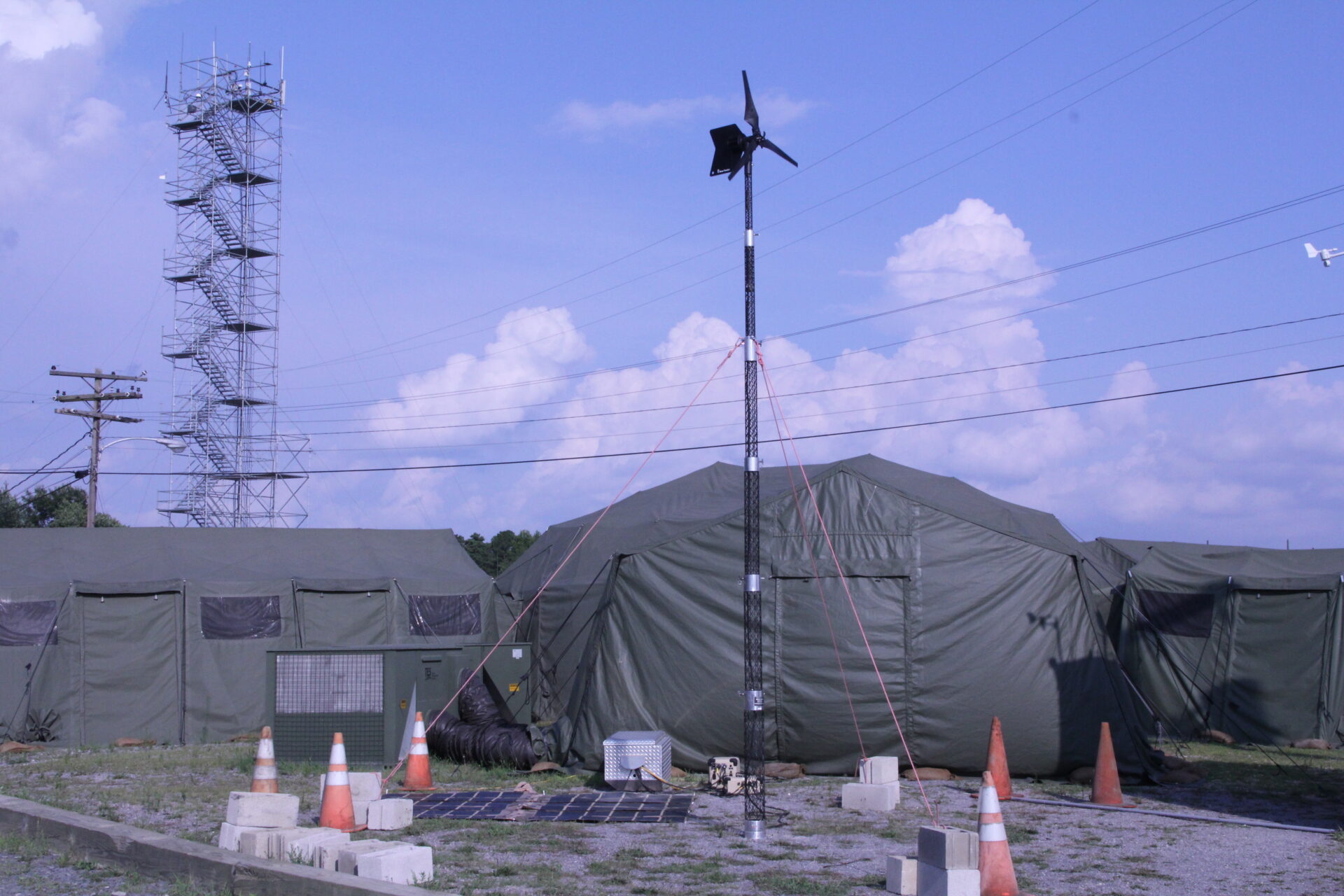
Figure 1: A tactical solar-and-battery microgrid at Fort Dix, New Jersey, 2012. Photo: SPC Robert Porter, U.S. Army, via DVIDS.
Executive Summary: The Strategic Imperative of Energy Sovereignty
The Southeastern United States stands at a critical juncture where the escalating volatility of climate systems intersects with the maturation of distributed energy technologies. For Latin American exporters with plants, warehouses or distribution partners in the Southeastern U.S., and for the U.S. investors, developers and planners who build there, depending on the grid alone is becoming a measurable business risk.
This report looks at the economics of on-site power, the operational risk it reduces, and the federal incentives that remain.
In the wake of intensifying weather events—from the hurricane-battered coasts of Florida to the tornado corridors of Alabama and Georgia—the "Value of Lost Load" (VoLL) has emerged as a primary metric for investment due diligence. A single prolonged outage can be costly for industrial facilities, data centers, and critical community infrastructure. The solar-plus-storage microgrid, an integrated system capable of islanding from the main grid during failure, offers a hedge against this volatility.
Section 1: The Macro-Economic Thesis for Resilience Investment
A microgrid turns part of a facility's energy spending into an asset it owns. The deployment of solar-plus-storage microgrids represents a shift toward decentralized asset ownership, where the investor captures value previously ceded to the utility monopoly.
1.1 The Rising Cost of Vulnerability (VoLL)
The economic argument for microgrids is foundational to the concept of resilience. The "Value of Lost Load" (VoLL) quantifies the economic damage incurred by a consumer due to the unavailability of power. Manufacturing processes in Alabama, logistics hubs in Georgia, and hospitality centers in Florida operate on just-in-time principles where power continuity is non-negotiable. Research on firms in developing economies shows a similar pattern: smaller firms find it harder to finance protection against climate shocks (see our summary).
1.2 The "Value Stacking" Revenue Model
The financial viability of a microgrid investment relies on "value stacking"—the aggregation of multiple revenue streams and cost-avoidance mechanisms into a single pro-forma.
- Resilience (Avoided VoLL): Seamless islanding during grid disturbances prevents revenue loss and operational downtime.
- Peak Shaving: Battery discharge during peak demand windows reduces demand charges, which typically make up 30–70% of a commercial customer's electric bill (NREL).
- Tax Equity (ITC): Utilization of the Investment Tax Credit and MACRS depreciation reduces capital expenditure basis and tax liability.
1.3 The Federal Tax-Credit Window
Federal incentives for solar narrowed under the One Big Beautiful Bill Act, enacted July 4, 2025. The residential credit (Section 25D) ended for expenditures after 2025. Commercial solar under Section 48E generally required construction to begin by July 4, 2026, or the system to be placed in service by December 31, 2027. Storage was treated differently and remains eligible, subject to new foreign-entity sourcing rules. With the construction-start date now past, investors should confirm project timing and tax treatment with a tax advisor before committing capital.

Figure 2: Commercial battery energy storage systems (BESS) provide the firm capacity needed to stabilize voltage during islanding.
Section 2: Regional Market Analysis
Florida: The Resilience Frontline
The investment narrative here is dominated by hurricane risk. Businesses view microgrids as a business continuity necessity. We recommend partnering with established players like SunFarm Energy, a Pensacola-based solar contractor serving the Panhandle, or Ameresco for larger MUSH market projects.
Georgia: The Innovation Laboratory
Georgia serves as the R&D hub for the region. The Tech Square Microgrid in Atlanta, installed by PowerSecure for Georgia Power and Georgia Tech (operating since 2021), demonstrates that microgrids can be integrated into dense commercial environments. Another key partner, Renewvia , focuses on turnkey EPC services for commercial clients across the state.
Alabama: The Industrial Stronghold
Alabama’s market is characterized by heavy industry. Eagle Solar & Light, a Birmingham-based solar installer founded in 2016, has completed commercial and nonprofit projects. For industrial-grade solutions requiring integration with diesel gensets, Thompson Power Systems utilizes Caterpillar technology for maximum reliability.
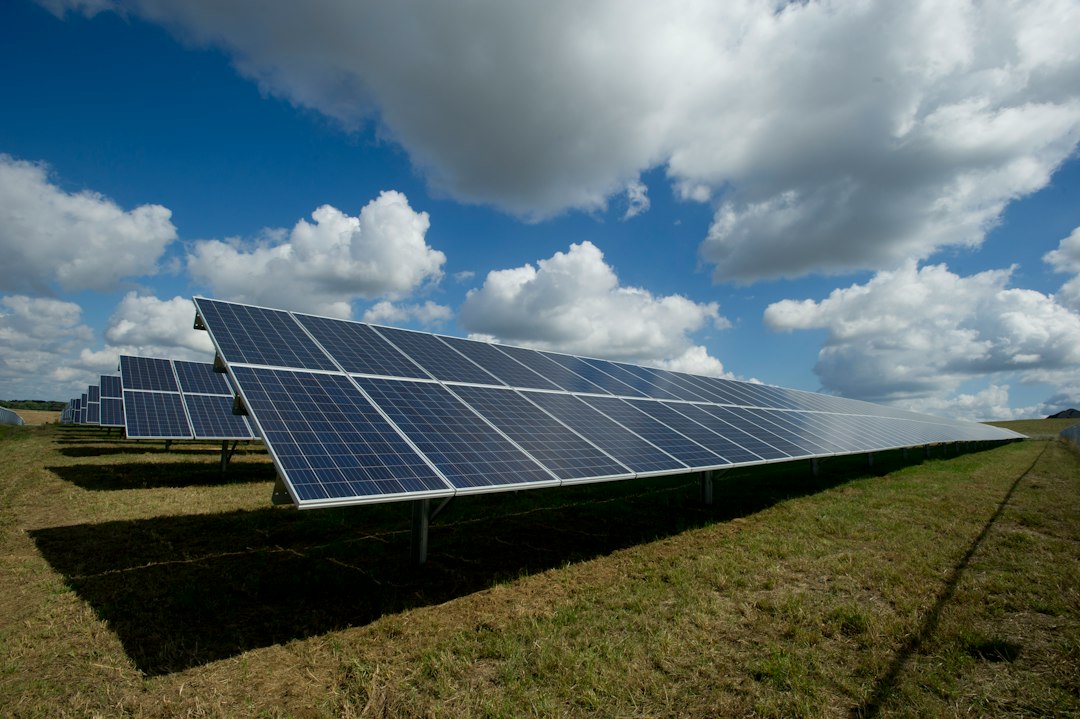
Figure 3: Utility-scale solar installations provide the generation backbone for resilience hubs (illustrative image).
Section 3: Strategic Intelligence
Navigating the regulatory waters of the Southeast requires actionable intelligence. We recommend monitoring the following organizations:
- Southern Alliance for Clean Energy (SACE): Their "Solar in the Southeast" report tracks utility solar progress across the region each year.
- Southeast Sustainability Directors Network (SSDN): Works with member cities on community resilience hubs.
- Nicholas Institute: Provides frameworks necessary to justify projects on equity and social resilience grounds.
Build Resilience Before the Next Storm Season
The storms are intensifying. Communities and investors that plan for resilient power now will be better positioned when the next one hits.
Orbis Management helps Latin American exporters and U.S. businesses assess partners and incentives in Florida, Georgia and Alabama.
Disclaimer: The information provided in this blog post does not, and is not intended to, constitute legal, financial, or investment advice; instead, all information, content, and materials available on this site are for general informational purposes only. Information on this website may not constitute the most up-to-date legal or other information. Readers of this website should contact their attorney or financial advisor to obtain advice with respect to any particular legal or financial matter. No reader, user, or browser of this site should act or refrain from acting on the basis of information on this site without first seeking legal advice from counsel in the relevant jurisdiction. All liability with respect to actions taken or not taken based on the contents of this site are hereby expressly disclaimed. The content on this posting is provided "as is;" no representations are made that the content is error-free. Orbis Management and Juan Salva assume no responsibility for errors or omissions in the contents of the Service.
Copyright © 2026 Orbis Management. All rights reserved.