The Global Agricultural Landscape in 2026: A New Macroeconomic Equilibrium
Last reviewed:
Updates since publication
- Forecast dates. This outlook was written in February 2026 and uses USDA, World Bank and Federal Reserve projections available then. USDA revises its supply and demand estimates every month; check the latest WASDE report before relying on the figures below.
Global Agricultural Commodity Market Outlook 2026: An Analysis of Key Market Drivers and Risks
By Juan Salva | Orbis Management | February 12, 2026

Market stabilization and macroeconomic shifts define the 2026 agricultural landscape.
The global agricultural economy in 2026 has entered a phase of measured stabilization, transitioning from the extreme volatility of the early 2020s toward a more complex, policy-driven equilibrium. The World Bank projects a modest 2% decline in its agricultural price index in 2026, signaling that supply growth is finally keeping pace with global demand.
The Macroeconomic Backdrop: Growth and Interest Rates
Global economic growth is forecast to ease slightly to 2.6% in 2026. While resilient, the sector remains sensitive to downside risks, particularly weaker industrial activity which impacts demand for edible oils and beef. A critical driver for 2026 is the U.S. Federal Reserve’s monetary easing; the federal funds rate declined from 5.3% in 2024 to about 3.6% by the end of December 2025 (World Bank). This shift serves to lower financing costs for inventory and capital improvements while potentially weakening the U.S. dollar, thereby improving the competitiveness of U.S. exports.
Geopolitics: The "Middle Game" of Trade
Agricultural commodities are no longer governed solely by supply and demand but have become "pawns on a geopolitical chessboard." We are witnessing a "subsidy race" where major producing nations—the U.S., Brazil, Russia, and Indonesia—intensify domestic support programs to protect farmers from low prices. This intervention often mutes market signals, sustaining high production despite global surpluses.
A primary flashpoint remains the U.S.-China trade dynamic. Chinese buyers have increasingly prioritized Brazilian soybeans, forcing U.S. exporters to seek alternative markets in Southeast Asia and the United Kingdom.
2026 Commodity Deep-Dive: WASDE Forecasts
- Wheat: U.S. ending stocks are projected to rise 9% to 931 million bushels, with season-average farm prices softening to $4.90/bu.
- Corn: Record production of over 17 billion bushels continues to anchor prices, with ending stocks of about 2.1 billion bushels, a stocks-to-use ratio near 12.9%.
- Soybeans: Increased production in Brazil (forecasted at 180 million metric tons) has pressured U.S. exports, bringing season-average prices to $10.20/bu.
- Rice & Cotton: Rice ending stocks are projected to fall about 7% to 50.3 million cwt, while Cotton remains financially strained by high input costs and weak global demand.
Figures from USDA’s February 10, 2026 WASDE report.
Southeastern U.S. Regional Snapshot
For agribusinesses in the Southeast, the 2026 outlook is a story of resilience through infrastructure and technology.
Florida: The peanut industry remains a bright spot, with Florida producers receiving an average of $522/ton. Logistics leaders like Saddle Creek Logistics in Lakeland are providing the state-of-the-art warehousing necessary to reach retail markets. For critical water management, Foxworth & Moore Irrigation in Pensacola ensures precision hydration for high-value landscapes.
Georgia: With agriculture directly valuing over $18 billion to the state economy, Georgia is a hub for innovation. Ag Technologies in Cordele provides the precision field mapping and autonomous upgrades required to maintain margins in a high-cost environment. Local transportation is supported by SouthernAG Carriers in Albany, specializing in peanut and cotton logistics.
Alabama: Auburn University’s research efforts contribute $6.34 billion to the state economy. Alabama leads in ag-tech exports through companies like Pursell Agri-Tech (Sylacauga), which exports controlled-release fertilizers globally. Infrastructure is further bolstered by Jerry Pate Company in Birmingham, the region's premier provider of turf and irrigation products.
Technology and Automation: The Profitability Necessity
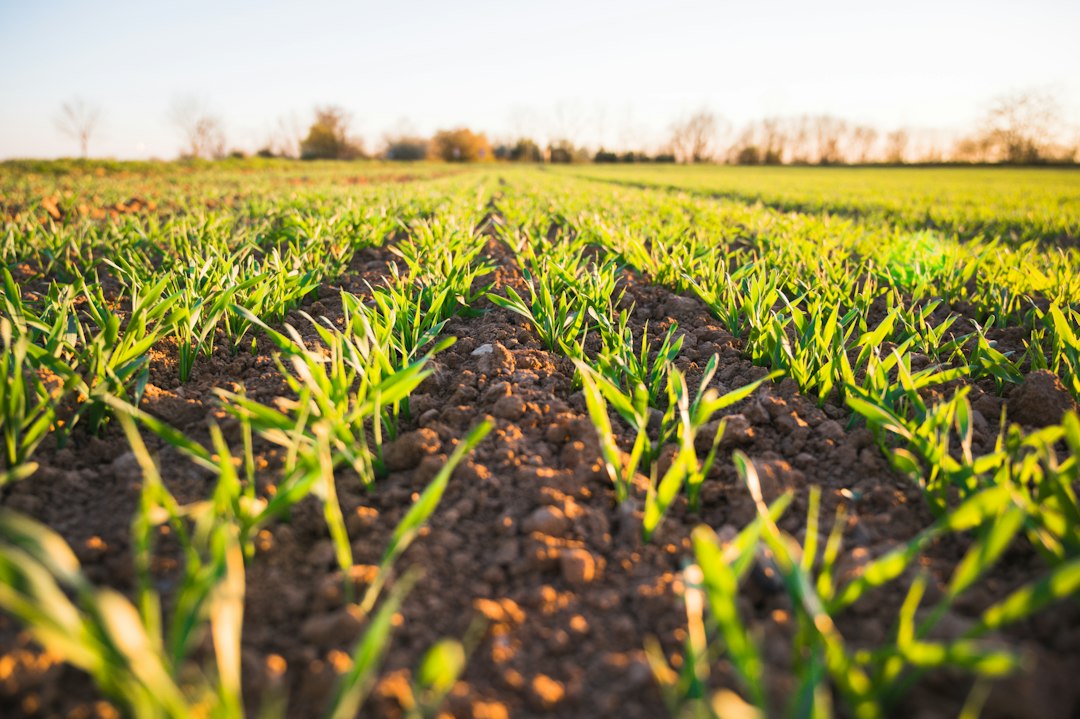
Precision farming technologies are projected to reach a market size of $12.7 billion by late 2026.
With agricultural wages increasing by roughly 35% since 2019, automation has shifted from an "optional upgrade" to a "financial necessity." The precision farming market is projected to reach $12.70 billion in 2026, driven by AI-driven farm analytics, autonomous drones, and wireless irrigation systems—such as those provided by Wireless Irrigation Technologies in Athens, GA.
Expert Recommendations: Think Tanks & Non-Profits
For continuous monitoring of these trends, we recommend the following Southeastern organizations:
- agInnovation South: Coordinates multistate research across 15 Southern Land-grant Universities.
- Farm Foundation: A non-partisan accelerator of practical solutions and digital ag research.
- SCCAHS (Southeastern Coastal Center for Agricultural Health and Safety): Leads regional research on occupational safety and the "farm bill" impact.
- Alabama Sustainable Agriculture Network (ASAN): Provides technical and social support for sustainable farmers.
Questions about your market-entry plan?
Orbis Management helps Latin American exporters selling to the U.S., and U.S. businesses entering Latin America, assess markets, partners and incentives. Get in touch to discuss your situation.